
Article: So you lost a gemstone from your ring, now what?
So you lost a gemstone from your ring, now what?
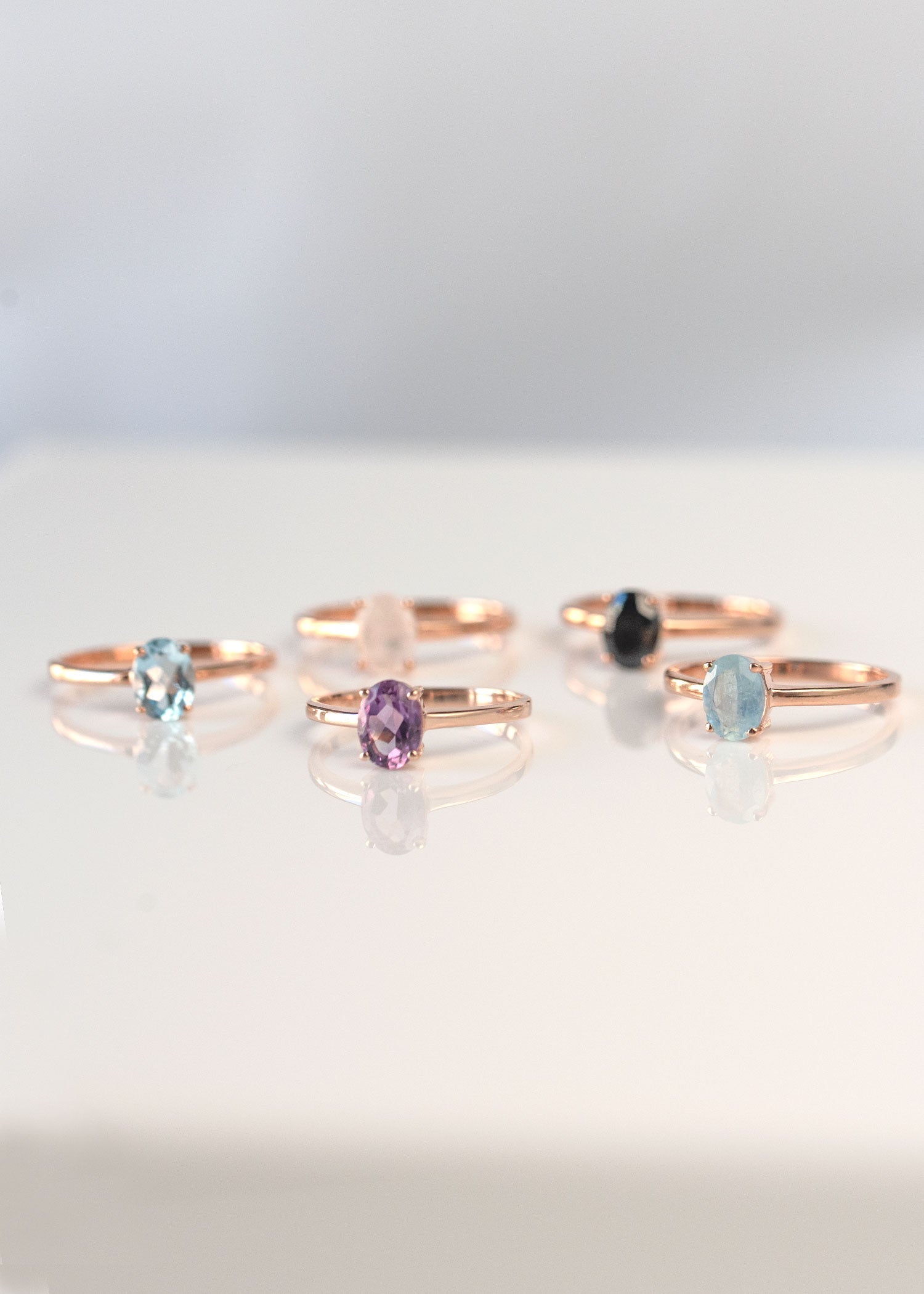
Missing a stone from your favorite ring is not fun; however, it cannot always be due to a manufacturing defect. Some of the reasons your gem may fall off or become loose are -
- One biggest and obvious sign is a change in the shape of the ring from round to oval. If the ring has undergone excessive strain, even the strongest prongs will eventually become loose, regardless of quality or metal.
- Heavy machine work or strain on your hands can alter the shape of a ring, turning it from circular to oval. This change can cause the setting to stretch, which may loosen the stones. This is very common for delicate rings. For example, lifting heavy furniture or working out at the gym with your rings on.
- Accidentally hitting a hard surface may move the prong from its place and make the stone lose. Likely to happen during exercising, doing the dishes, etc
- Pressing down the stone or continuously fiddling with the ring, eventually causing micro cracks in the metal or the stone
- Exposure to Chlorine or similar chemicals that may rust the metal or shrink the stone. Bleach is another chemical that slowly eats the metal.
- Ring stuck in clothes/thread and then pulled out, which may loosen the prongs.
- Rings are sometimes stored under heavy objects like books or with tangled metal mess such as chains.
- Not understanding the gemstone hardness, aka MOHS scale, and where your gemstone stands on the scale. This is crucial! For e.g., Opals tend to change color, and Mother of Pearl tend to shrink in water.
- Consider a four-prong setting instead of a two or three-prong setting, as the latter can be extremely delicate. Always choose at least four prongs surrounding each stone for better security. Bezel setting is the best for everyday wear.
- Put your rings on last before going out and take them off first when you return home to make them last longer.
- Every few weeks, check the stone's setting to ensure it is secure. Gently shake the piece to listen for any rattling sounds that might indicate movement. Inspect the prongs for any damage or misalignment. If you notice any issues, take it to a jewelry repair store. They can often fix it for a minimal charge, or in some cases, tighten the prongs at no cost if there's no damage to the ring.

Image Credit: gia.edu
Moonstones and Labradorites have a hardness rating of 6-6.5, making them suitable for ring wear but not for everyday use. It is acceptable to wash your hands with the rings on when outside, but wearing them while doing dishes, showering, sleeping, or swimming can cause even the strongest stone with a MOHS score of 10 to break quickly.
Prong set rings are delicate compared to bezel set, so special care is required, even for solid gold set with the hardest stone. Ring set in sterling silver/vermeil may cost a fraction of the price of solid gold; however, it is important to remember that gold is a denser metal than silver and can hold the setting for a much longer time than silver. Your stone can still come off if care is not taken. But that's what extended warranties are for, and you end up paying that extra $800 for the warranty, which may or may not cover!
When it comes to natural gemstones, with a little bit of research & knowledge, you can easily create a beautiful collection that can be passed down through generations with proper care.

Leave a comment
This site is protected by hCaptcha and the hCaptcha Privacy Policy and Terms of Service apply.